You run a creator campaign. Real people, real stores, real content. The posts go up, the metrics roll in: followers reached, engagements logged, views stacking up. Your engagement rate looks strong. Someone on your team does a little victory lap in Slack. You share the recap and it looks good on paper.
Then you wonder: did it actually move product?
That question - the one that lingers after every campaign recap - is the most important one in CPG right now. Honestly, even asking it puts you ahead of most brands still optimizing purely for platform performance.
What Good Creator Metrics Actually Tell You
Let’s be clear about something: the social metrics that come out of a well-run creator campaign are genuinely meaningful. Knowing your total reach, your engagement rate by follower, your engagement rate by reach, your total real views - these data points tell you a real story. They tell you whether your content resonated, whether your creators’ audiences are actually engaged or just inflated, whether your messaging is landing, and whether your product is showing up in a way that feels authentic to the people watching.
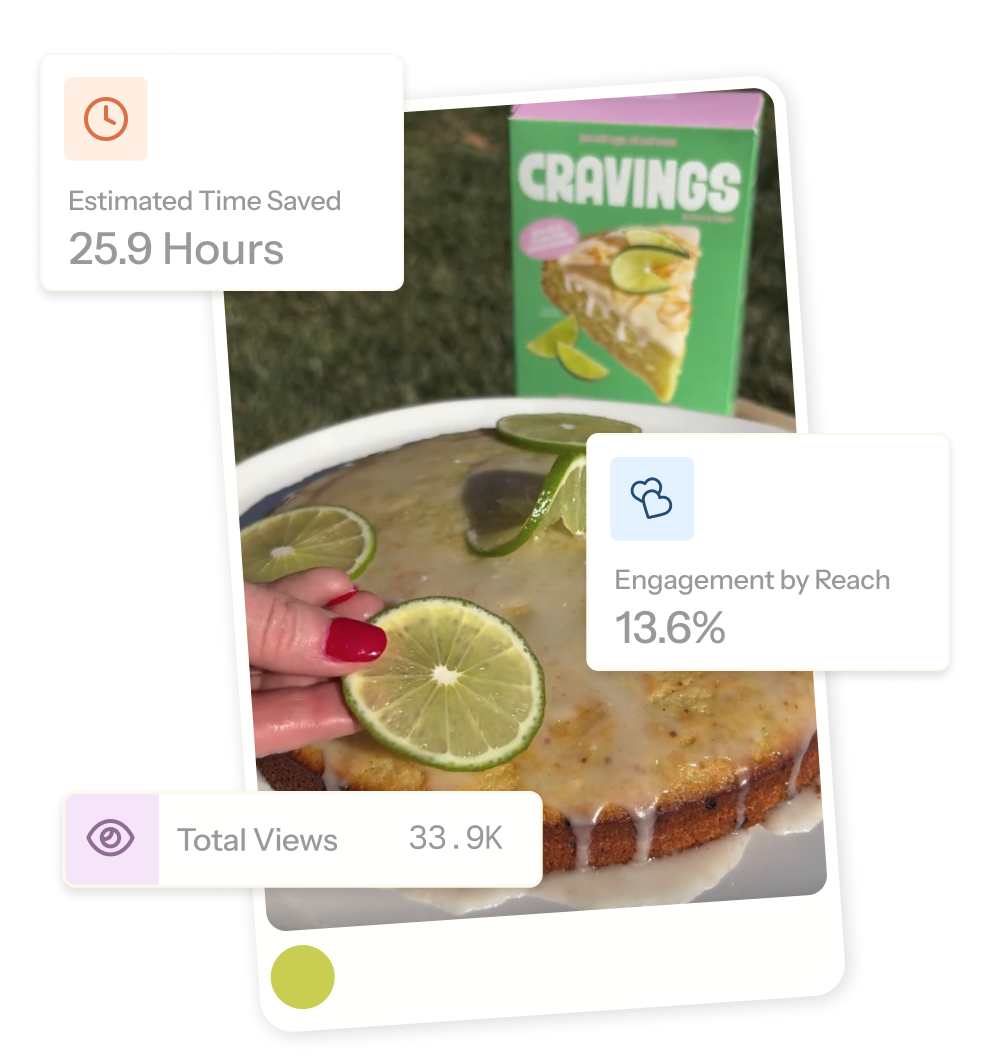
There’s also a newer metric that’s starting to change how brands think about ROI: estimated hours saved. When you run creator programs at scale, you’re not just buying content; you’re freeing your team from the sourcing, briefing, and production work that would have taken dozens of hours otherwise. That’s actual budget back in your pocket, and it belongs in your ROI math.
These metrics matter. They’re part of the story. They’re just not the whole story.
The Gap Between a View and a Purchase
Here’s the honest truth about social metrics in a retail world: they measure the top of the funnel really well. Awareness, familiarity, consideration - all of that lives in reach and engagement data. What they can’t see is what happens next.
Think about the person who saves a creator’s post on Tuesday, then walks past your product at Whole Foods that Saturday. They recognize it from their feed, pick it up off the shelf, and toss it in their cart. That entire journey - from scroll to shelf to purchase - is invisible to social analytics. It happened, it counted, it might have even contributed to a restock down the line, yet your campaign dashboard has no visibility into it whatsoever.
This isn’t a criticism of social metrics. It’s simply the nature of what they’re built to do. They’re platform metrics, designed to live on the platform. CPG brands, though, don’t just sell on platforms. They sell on shelves, and shelves run on velocity.

What Velocity Actually Means in Retail
For anyone who’s been in a buyer meeting lately, you already know: velocity is the metric your retail partners care about most. It’s the rate at which your product moves off the shelf, measured in units sold per store per week at a given retailer. High velocity means happy buyers, more facings, better placement, and the kind of momentum that keeps you on shelf through the next reset. Low velocity means hard conversations, reduced distribution, and shelf space quietly going to someone else.
Velocity is the proof that consumers aren’t just aware of your product. They’re buying it. For most CPG brands running creator programs today, there’s still a gap between the content being created and the velocity data sitting in their retail reports. The two exist in separate worlds. You can see the engagement, feel confident the campaign performed, yet connecting those dots to actual purchase behavior is still largely a manual exercise - an educated guess, or a hope.
Where Creator Marketing Is Heading
Here’s where things get interesting. Creator marketing has always been good at the top of the funnel, but the most exciting evolution happening right now is the push to connect discovery to action: community-powered content that doesn’t just create awareness, but actually activates people to try the product in real life, at real retailers, with a traceable path from post to purchase.
Imagine being able to see not just how many people engaged with your creator content, but how many people in your target markets actually bought the product at retail as a result - verified, attributable data that shifts a buyer meeting from “our campaign generated great engagement” to “our community drove measurable velocity at your stores.” That layer of measurement is where this is all heading, and the brands who are already thinking in these terms - running community-powered campaigns and asking the harder questions about retail impact - will be well ahead of the curve when it becomes the standard.
What to Be Tracking Right Now
While the full velocity picture continues to develop across the industry, here’s what the smartest brands are already paying close attention to.
Engagement rate by reach (not just by follower). This is one of the most telling signals in creator marketing. It shows how well your content is actually capturing attention relative to how many people saw it, not just how large the audience was. A smaller, more engaged community often drives more real-world action than a large, passive one.
Total reel views. Not inflated numbers, but actual humans watching actual content. This grounds your reach data in reality and helps you identify which creators are genuinely connecting versus just posting.
Content reuse across channels. The creator content you’re generating doesn’t have to live and die on one platform. When that UGC flows into your social ads, your email, your retail activations, every additional touchpoint multiplies its value. Are you tracking how much of what you create actually gets reused?
Estimated hours saved. This one tends to get overlooked, but it matters. The time your team isn’t spending on sourcing creators, writing briefs, and managing production is real. It has dollar value. It belongs in the story you tell about ROI.
And the measurement story is still being written. The brands who are already thinking beyond the platform metrics - asking harder questions about what their campaigns actually do in the real world - are the ones who will be best positioned when the next chapter arrives.
The Question Worth Sitting With
The metrics you’re tracking today are real, and they’re telling you something true about your campaigns. Here’s the question the whole industry is building toward, one worth asking before everyone else gets there:
How do you prove the post moved product at retail?
Real proof, not “we think it contributed” or “engagement was strong,” but verified purchase behavior tied to the community you’ve been building, at the retailers that matter to your brand. That answer isn’t fully written yet. The brands asking the question now, though, are going to be the ones who have it first - and the ones who can walk into a buyer meeting with data that actually moves the needle.
Views are a great start. Velocity is the finish line.
Frequently Asked Questions
What is retail velocity and why does it matter for CPG brands?
Retail velocity refers to the rate at which a product sells through at a specific retailer over a given time period, typically measured as units sold per store per week. It’s one of the most important metrics for CPG brands because retail buyers use it to make decisions about shelf placement, facings, and continued distribution. High velocity signals strong consumer demand and keeps brands on shelf, while low velocity puts that shelf space at risk.
What metrics should CPG brands track for creator marketing ROI?
Strong creator programs generate a range of meaningful metrics: total follower reach, total engagements, real video views, engagement rate by follower, engagement rate by reach, and estimated hours saved from not having to source and produce content independently. Together, these paint a clear picture of content performance and campaign efficiency. The emerging next layer is the ability to connect community activity to real-world consumer action in a measurable way.
Why doesn’t engagement rate alone prove a creator campaign worked?
Engagement rate measures how content performs on a platform: how many people liked, commented, shared, or watched. It doesn’t measure what happened after someone put down their phone. The path from social discovery to in-store purchase involves multiple steps that social platforms can’t track, which means strong engagement is a promising signal, not a complete proof of retail impact.
What is the difference between engagement rate by follower and engagement rate by reach?
Engagement rate by follower measures interactions relative to a creator’s total follower count. Engagement rate by reach measures interactions relative to how many people actually saw the content. Reach-based engagement is often a more accurate indicator of content quality and real audience interest, especially for creators whose content reaches beyond their follower base through discovery and sharing.
How does estimated hours saved factor into creator marketing ROI?
When brands run creator programs at scale, they’re not just generating content; they’re offloading the sourcing, briefing, coordination, and production work that would otherwise fall on their internal team. Estimating the hours saved by having this managed externally assigns real dollar value to that efficiency, and it belongs in any honest ROI calculation alongside reach and engagement data.
What does it mean for creator marketing to drive retail velocity?
Creator content builds product awareness and familiarity with consumers in your target markets. When those consumers encounter your product at retail, that prior exposure influences their purchasing decision. A creator program that’s genuinely driving velocity isn’t just generating views; it’s activating people to try the product in real life, at real retailers, contributing to the shelf movement that keeps your brand in distribution and growing. The next frontier in creator marketing is building systems that can measure and verify exactly that.
Learn more, grow faster
Content designed to help brands understand what
actually works at retail.
.png)