
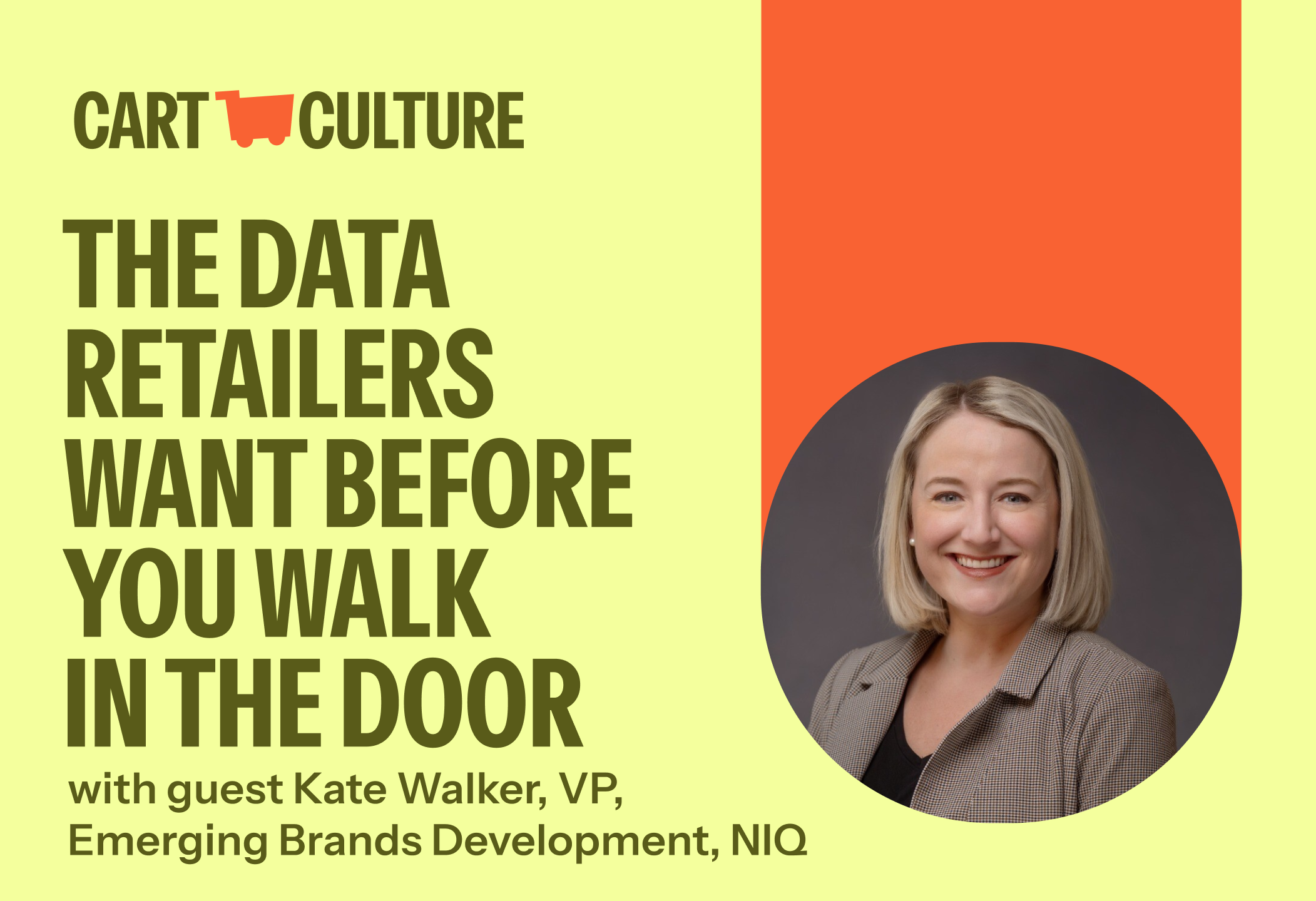
Cart Culture: The Data Retailers Want Before You Walk In the Door
TL;DR — Three Things Every CPG Brand Should Take Away
Retail readiness starts long before you pitch a buyer
NIQ’s framework for breakthrough retail success comes down to three things — right idea, right product, right execution — and missing any one means a brand is playing catch up from the start. Financial readiness matters just as much as product-market fit: brands routinely underestimate the slotting fees, inventory minimums, and trade marketing spend required to properly support a new retail partnership. Retailer accelerator programs like Target Accelerators, Whole Foods’ LEAP program, and Walmart’s Open Call exist specifically to educate emerging brands on what “retail-ready” looks like before they ever pitch.
Data alone doesn’t win shelf space — storytelling does
NIQ’s “Power 10” pitch framework closes on what Kate calls the “why believe” slide — the social-proof moment that makes buyers want to champion a brand internally. Brands should tailor their story by retailer, since understanding a chain’s pricing strategy, shopper priorities, and public strategic signals shows buyers they’ve done their homework. Growth in the U.S. market is increasingly a function of price, not units — which is exactly why a brand that can prove real unit velocity has genuine leverage in a buyer conversation.
AI is a research accelerant, not a pitch-deck generator
Buyers can spot an AI-generated pitch deck immediately — Kate’s advice is to never export a ChatGPT deck straight into a line review. Where AI genuinely helps is benchmarking discoverability against competitors, digesting a retailer’s public priorities, and speeding up early research, as long as the inputs are validated. Ground-truth, human-verified data — local creator sentiment and real retail purchases — becomes more valuable, not less, as synthetic and AI-generated data becomes more common.
Unlock the full playbook:
Access the complete webinar recap, including key takeaways, examples, and a detailed table of contents to explore every insight.