.png)
The Problem With Hoping
Every CPG brand leader will tell you word of mouth is their best channel. They'll say it lights up their DMs, it's what keeps products on shelves, it's why their retail buyers keep calling back.
Then you ask how they're building it. Systematically, intentionally, as a channel they can actually measure and grow.
Most of them go quiet.
Because the honest answer is: they're not. They're hoping for it.
Word of mouth for most CPG brands isn't a strategy. It's a side effect. And that distinction — between building word of mouth and waiting for it — is the gap between brands that compound and brands that stall.
Word of Mouth Is Infrastructure. Not Inspiration.
Here's the framing shift that changes everything: word of mouth isn't a result of marketing. It's a channel you can design.
Like any channel, it has inputs. It has structure. It can be funded, measured, and scaled. The brands that treat it as infrastructure think in systems. The brands that treat it as a bonus think in campaigns.
Systems keep running. Campaigns end.
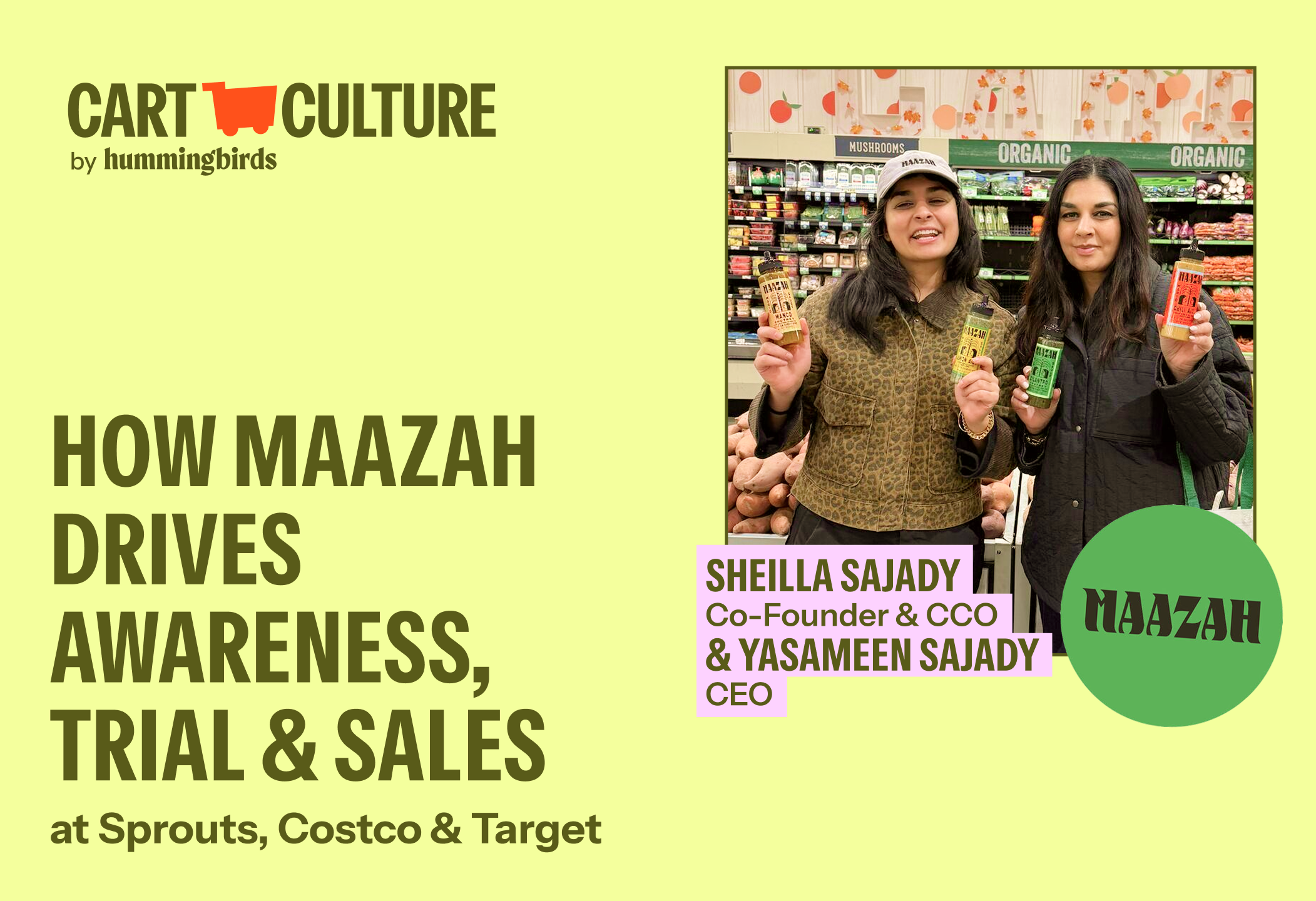
Adam Brown, founder of Sircle Media and a longtime operator in the CPG creator space, put it this way on a recent episode of Cart Culture:
One creator, one post, one moment of attention — that's a squat. An always-on community of real people, talking about your product to the people in their lives, consistently, across dozens of markets — that's a workout program. The compounding happens over time. And the brands who started building earlier are already ahead.
The Local Density Angle Nobody's Talking About
Here's the piece of word of mouth that most brands miss entirely: local density matters more than reach.
A creator with 200,000 followers who posts about your product to a national audience generates impressions. A creator in the same zip code as a Target posting about your product on a Tuesday can drive a specific shopper to that specific store that week.
Think about what that means for a growth-stage CPG brand managing retail relationships. It's not just about being seen. It's about being bought — at the right store, in the right market, in the right window of time when your buyer is watching velocity numbers.
Hyperlocal creator activity is how you build the proof that your product belongs on shelves in a given market. Not through national reach. Through concentrated, community-powered action in the zip codes where you actually sell.
When 10 creators in Chicago are posting about your granola at Whole Foods in the same two-week window, that's not organic happenstance. That's infrastructure. That's something you built.
The Compounding Problem With One-and-Done
Most creator programs are structured as one-and-done: hire a creator, get a post, measure impressions, move on. It feels like marketing. It shows up in a report. And it generates almost no compounding value.
Here's why: word of mouth doesn't compound from a single post. It compounds from repeated exposure across a trusted network over time. The tenth time someone in your neighborhood hears about a product — from a friend, from a local creator they follow, from someone in their mom group — is when it tips into action.
Brands that run always-on creator programs understand this. They're not optimizing for a single post. They're building a body of community voice that accumulates over months and years. New shoppers find their product because an older post is still driving search traffic. Existing fans see their community getting louder and lean in further. Creators deepen their relationship with the brand because it feels like a real partnership, not a transaction.
The brands who are building this kind of always-on community aren't just generating content. They're building a distribution layer that gets stronger over time. Every creator they bring in adds more local density. Every post adds more signal. Every community relationship adds more trust. That's infrastructure.
What Word of Mouth as Infrastructure Actually Looks Like
Building word of mouth as a system isn't complicated, but it does require a different mental model.
Always on, not campaign-based
Instead of activating creators for a product launch or a seasonal push, brands with infrastructure run continuous creator programs. The goal isn't a spike. It's a baseline that grows.
Local before national
Infrastructure-minded brands prioritize depth in key markets over breadth across all markets. They'd rather have 50 creators in Houston who are deeply embedded in the communities where they sell than 500 creators spread thin across the country with no geographic concentration.
Built on relationships, not transactions
Brands don't get pulled from a shelf because awareness was low. They get pulled because trial didn't materialize, velocity stalled, and repeat demand didn't show up. The brands that avoid this aren't the ones running the most campaigns. They're the ones who've built communities of real people who actually buy their product, come back, and bring others with them.
Everyday people, not just influencers
The shift away from paid macro-influencers and toward trusted local voices — people whose neighbors actually ask them for recommendations — is where the highest-ROI word of mouth lives. The surprise-and-delight formula. Sliding into the DMs of people who mention you organically. Sending product to a local creator who's already a fan. These aren't just nice gestures — they're infrastructure investments that pay out in community density over time.
The Unfair Advantage Is Coming
Word of mouth as infrastructure is already valuable. Brands that have built it are seeing it in their velocity numbers, in their buyer conversations, in the kind of community loyalty that shows up when a new SKU launches and sells through quickly.
But the brands building this now are positioning themselves for something even more powerful: the moment when word of mouth becomes fully measurable.
The gap between creator-driven awareness and verified, trackable retail impact has always been the knock against community-based marketing. You feel it. You believe in it. But you can't always prove it — not in the way your retail buyer needs to see in a velocity report.
That gap is closing. The brands who already have the community, already have the creator relationships, already have the hyperlocal density in the markets where they sell — they're going to have an enormous advantage when attribution becomes table stakes in this space. Because they won't have to go build the community from scratch. They'll just have to turn on the measurement.
Word of mouth as infrastructure is already worth building. But the brands who are building it right now, before the attribution layer is standard, are the ones who will look like geniuses in two years.
Start Before You Think You're Ready
The most common mistake CPG brands make isn't investing too early in word of mouth. It's waiting too long.
They wait until they have more doors. More budget. More bandwidth. More proof that it works.
But word of mouth doesn't turn on overnight. The community you need for your next buyer meeting is the community you should have started building six months ago. The density you want at Target in Chicago in Q4 depends on the creator relationships you build in Q2.
Systems take time to compound. That's what makes them infrastructure — and what makes them so hard to replicate quickly.
The best CPG brands aren't waiting for word of mouth to happen to them. They're designing the system. They're building the community. They're showing up in the right zip codes with the right creators over and over again, not because every single post drives a measurable result, but because the accumulated weight of all of it eventually moves the shelf.
That's the infrastructure play. Start building it now.
.png)